

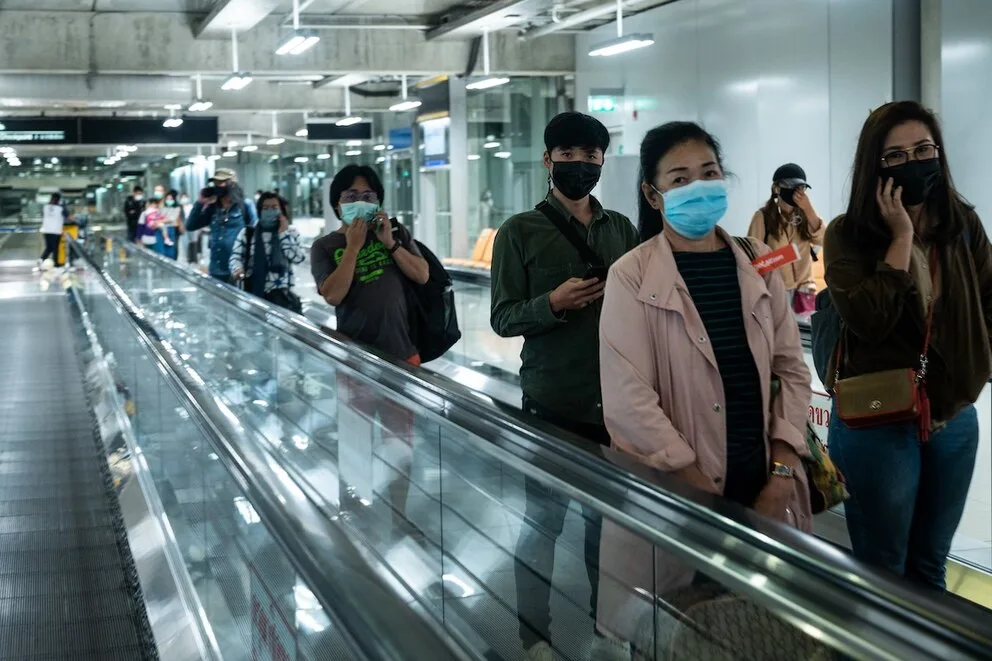
At the end of January 2026, new infections with the Nipah virus (NiV) were confirmed in the Indian state of West Bengal. The pathogen is considered particularly dangerous due to its relatively high mortality rate. Moreover, there is currently no approved treatment or vaccine. Several Asian countries have responded to the current situation by tightening their health and entry controls. What travelers need to know now–at TRAVELBOOK.
According to the latest weekly report from the Robert Koch Institute (RKI), around 7.4 million people in Germany are currently affected by acute respiratory diseases such as flu, colds, or viral infections of the upper respiratory tract–a comparatively high number. The largest share is made up of influenza viruses. The feared Nipah virus, which is currently occurring mainly in South and Southeast Asia, has not yet been detected in Germany. Nevertheless, we all remember the early days of the coronavirus pandemic. Therefore, many people here may feel uneasy when surrounded by sneezing and sniffing individuals.
What is the Nipah Virus?
The Nipah virus is a so-called zoonotic virus, as it is originally transmitted from animals to humans–primarily from fruit bats, but possibly also from pigs. With close contact, the virus can also be passed from person to person through droplet infections.
The pathogen is considered highly dangerous. According to the Bernhard Nocht Institute for Tropical Medicine (BNITM), an infection in humans can reach a mortality rate of up to 92 percent. The virus is mainly found in South and Southeast Asian countries, including India, Bangladesh, and Malaysia. It is particularly often associated with the Indian state of West Bengal, where larger outbreaks occurred in 2001 and 2007. Last January, two cases were confirmed there again. Both affected individuals worked in the healthcare sector.
Why the Pathogen is Considered Particularly Dangerous
An infection can initially manifest similarly to other respiratory diseases. In mild cases, only fever, cough, or headaches occur. According to BNITM, however, the disease can also take a severe course: Seizures, consciousness disorders up to coma are possible–in the worst case, the infection ends fatally.
It is also problematic that there is no approved vaccine and a specific antiviral therapy is still lacking.
Asian Countries Tighten Entry Controls
The European Center for Disease Prevention and Control (ECDC) reports that Indian authorities have initiated comprehensive contact tracing following the discovery of infections. The identified 196 contacts have since been in quarantine under medical observation. No further infections have been detected so far, although the incubation period can be up to 14 days.
Against this backdrop, numerous Asian countries have strengthened their entry and health controls–also due to the upcoming Chinese New Year on February 17, which is traditionally associated with high travel volumes. The aim of the measures is to detect possible infections early and prevent their spread.
More information on individual countries is published by the analysis company A3M. In Thailand, Vietnam, Indonesia, and Myanmar, temperature measurements, thermal imaging cameras, and random checks are conducted at airports. In Singapore and Hong Kong, targeted checks are carried out on selected flights from risk areas such as Kolkata. Nepal and Pakistan monitor both border crossings and the travel routes of incoming individuals. Cambodia is currently relying mainly on information and hygiene notices; there are no specific airport checks at present.
What Asia Travelers Need to Know Now
The risk of infection outside the affected regions is currently considered very low. Health experts still advise remaining vigilant. Before any trip, the current notices and recommendations of the authorities should be checked. Those staying in risk areas should pay particular attention to hygiene and avoid close contact with animals. If initial symptoms such as fever, headaches, or respiratory problems occur, it is important to seek medical help immediately to receive early treatment in case of infection.